
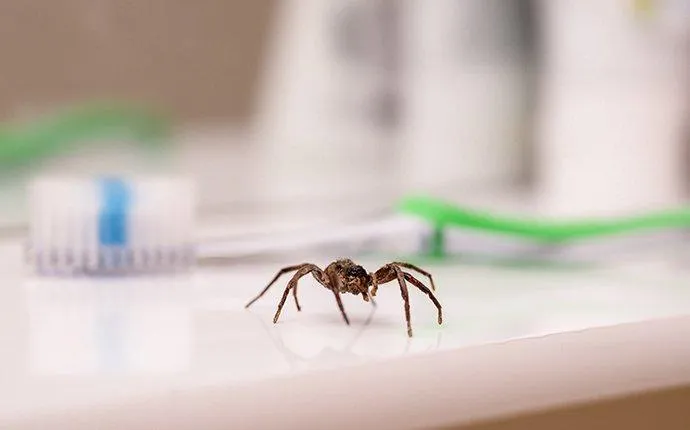
Types Of Spiders In Las Vegas
Though there are a variety of spider species living in Las Vegas, here are a few of the most common:
-
Cellar Spider – Commonly known as “Daddy Long Legs.” While they are poisonous to insects and other spiders, their fangs are small and unable to penetrate human skin. They typically live in plants and are found in seldom-used spaces such as nooks and crannies in your home or garage
-
Domestic House Spider – Varying in colors from gray to brown with banded legs and two dark stripes on their head and body. The females are unable to survive cold, outdoor conditions which push them to move into your home and are known for laying prolific egg sacs and rarely bite humans.
-
False Black Widows – There are over 120 species that can be confused for black widows, but they lack the characteristic markings attributed. Some of these spiders have significant bites but a majority are mild, they are non-aggressive except when harmed. They prefer the dark, undisturbed spaces of your home and become a nuisance due to their messy and tangled webbing.
-
Giant House Spider – Varying in color from orange, gray-brown, and dark brown with six dots on their posterior and a hairy abdomen and legs. Dubbed the fastest spider in the world, traveling at one mile-per-hour, they prefer to run away when confronted, but if bitten by one, you may suffer mild symptoms. They are common and make their home in corners and other undisturbed spaces with messy webs and are also known to be prolific sac layers.
-
Jumping Spiders – Made up of over 5,800 species, their shared characteristic is jumping. Their bite is painful, but not usually venomous. They like to live in the clutter and debris in or around buildings and so are usually deterred with proper cleaning and pick-up.
-
Orbweavers – Over 3,000 species characterized by their circular webs depicted in movies like Charlotte’s Web. They are drawn to the messy spaces that they can hide in and are deterred by light, clean areas.
-
Sac Spider – Maybe yellow, dark brown, or tan with a stinging bite that causes redness and swelling for a few days. Unlike other spiders, the sac spider does not bite aggressively. They favor hiding spaces in dark places, avoiding light and clean areas.
Cellar Spider – Commonly known as “Daddy Long Legs.” While they are poisonous to insects and other spiders, their fangs are small and unable to penetrate human skin. They typically live in plants and are found in seldom-used spaces such as nooks and crannies in your home or garage
Domestic House Spider – Varying in colors from gray to brown with banded legs and two dark stripes on their head and body. The females are unable to survive cold, outdoor conditions which push them to move into your home and are known for laying prolific egg sacs and rarely bite humans.
False Black Widows – There are over 120 species that can be confused for black widows, but they lack the characteristic markings attributed. Some of these spiders have significant bites but a majority are mild, they are non-aggressive except when harmed. They prefer the dark, undisturbed spaces of your home and become a nuisance due to their messy and tangled webbing.
Giant House Spider – Varying in color from orange, gray-brown, and dark brown with six dots on their posterior and a hairy abdomen and legs. Dubbed the fastest spider in the world, traveling at one mile-per-hour, they prefer to run away when confronted, but if bitten by one, you may suffer mild symptoms. They are common and make their home in corners and other undisturbed spaces with messy webs and are also known to be prolific sac layers.
Jumping Spiders – Made up of over 5,800 species, their shared characteristic is jumping. Their bite is painful, but not usually venomous. They like to live in the clutter and debris in or around buildings and so are usually deterred with proper cleaning and pick-up.
Orbweavers – Over 3,000 species characterized by their circular webs depicted in movies like Charlotte’s Web. They are drawn to the messy spaces that they can hide in and are deterred by light, clean areas.
Sac Spider – Maybe yellow, dark brown, or tan with a stinging bite that causes redness and swelling for a few days. Unlike other spiders, the sac spider does not bite aggressively. They favor hiding spaces in dark places, avoiding light and clean areas.
Other less common indoor dwelling spiders include black widow spiders, brown recluse spiders, hobo spiders, and wolf spiders.